Inquiry Question: What impact did colonialization have on Native Indian tribes?
29 minutes
Overview #
The Since Time Immemorial curriculum is an important addition to all curriculum in Washington state. These lessons attempt to correct historical omissions in history from past centuries. It also contributes to a more informed, inclusive, and compassionate student. We will approach these lessons using the Inquiry Methods as described by John Dewey. Through the inquiry model, students will engage directly with the material and draw conclusions themselves. With this inquiry-based approach, students will be able to see the multiple ways that colonization impacted American Indian tribes leading to the decimation of their land and culture.
This lesson is designed for a 4th grade classroom. It will be preceded with a snapshot biography lesson that introduces the importance of timelines and personal narratives. The following lesson will be a concept formation lesson on Culture. The inquiry lesson will include social studies and English language arts state standards.
The lesson will begin with a mystery time capsule hook where students can interact with artifacts from the past. Students will then be asked to create a hypothesis based on the observations they made. This process will be repeated over the remaining data sets. Hypothesis revisions will be recorded in an inquiry worksheet. Students will be asked to volunteer hypotheses to place onto a public document. At the end of the data sheets students will vote on the top 4 most compelling pieces of evidence in the public document. These pieces of evidence will then be used to create a foldable essay project.
State Standards #
This inquiry lesson will have the opportunity to cover many of the Common Core State Standards (CCSS) across both social studies and English language arts. The Yakima School District (YSD) list of guaranteed standards was consulted to narrow down the standards to the most important ones to focus on for our students.
Standards related to Social Studies #
SSS2.4.1
Identify disciplinary concepts and ideas associated with a compelling question or supporting questions that are open to different interpretations.SSS2.4.2
Identify the main ideas from a variety of print and non-print texts.SSS3.4.1
Draw on disciplinary concepts to explain the challenges people have faced and opportunities they have created in addressing local, regional, and global problems at various times and places.
Standards Related to English Language Arts: #
CCSS.ELA-LITERACY.RI.4.9
Integrate information from two texts on the same topic in order to write or speak about the subject knowledgeably.CCSS.ELA-LITERACY.RI.4.1
Refer to details and examples in a text when explaining what the text says explicitly and when drawing inferences from the text.CCSS.ELA-LITERACY.RI.4.2
Determine the main idea of a text and explain how it is supported by key details; summarize the text.CCSS.ELA-LITERACY.W.4.9
Draw evidence from literary or informational texts to support analysis, reflection, and research.CCSS.ELA-LITERACY.RL.4.2
Determine a theme of a story, drama, or poem from details in the text; summarize the text.CCSS.ELA-LITERACY.L.4.4
Determine or clarify the meaning of unknown and multiple-meaning words and phrases based on grade 4 reading and content, choosing flexibly from a range of strategies.CCSS.ELA-LITERACY.SL.4.1
Engage effectively in a range of collaborative discussions (one-on-one, in groups, and teacher-led) with diverse partners on grade 4 topics and texts, building on others’ ideas and expressing their own clearly.
Standards Related to Visual Arts #
- Performance Standard (VA:Cn10.1.4)
Create works of art that reflect community cultural traditions.
Content Objectives #
After completing this inquiry lesson, students will be able to:
- Identify ways American Indian Tribes were affected by colonization
- Create a graphic organizer for hypothesis revising
- Use vocabulary words when creating the foldable project
Higher-Order Thinking Outcomes #
After completing this inquiry lesson, students will be able to:
- Examine data sets critically to create a hypothesis
- Revise a hypothesis after examining a new data set
- Analize sources for evidence that directly answers the inquiry question.
- Judge evidence for importance in relationship to the inquiry question.
- Create a thesis based on evidence from multiple data sets.
Student-Friendly Social/Civic Outcomes #
After completing this inquiry lesson, students will be able to:
- Voice and share ideas respectfully
- Work together to create a public document with evidence related to the inquiry question
- Have meaningful discussions about the inquiry question
- Listening to others while they present their foldable
Language Learning Objectives/Academic Language #
This Inquiry lesson uses vocabulary specific to the ways American Indians have been treated. A word wall with vocabulary terms, definitions, and pictures when appropriate will be placed in the classroom for students to reference. Also, the teacher will embed vocabulary definitions as they come up in the lesson. The words on the wall would be sorted into themes related to Inquiry method, American Indian Culture, and Colonization. A printout of these terms will also be attached to the Inquiry Worksheet.

Vocabulary terms: misperceptions, tribal sovereignty, tumultuous, liberation, threat, homelands, alliances, futile, time immemorial, civil war, colonists, thesis, inquiry, hypothesis, data set.
Formative Assessment/Informal (Process) #
Students will be filling out an inquiry worksheet for their informal assessment. Students will be asked to create an initial hypothesis after the hook lesson, and then revise it after each data set. The teacher will walk around the classroom as students are revising their hypothesis to better understand how well they understand the lesson’s themes. This will give students the opportunity to ask questions related to the material and give the teacher a chance to clarify. Students will be given sentence stems to create their hypothesis and will be expected to write in complete sentences unless otherwise indicated by their individualized education plan. Further assessment of student understanding can be done during the creation of the public document. Students will have a chance to share their revised hypothesis and receive immediate feedback through discussion.
Summative Assessment/Formal (Product) #
Students will create a foldable essay (see example on page 37) that clearly states four impacts of colonization on American Indian Tribes. The foldable essay will demonstrate student learning about thesis creation through hypothesis revision. Students will reference the graphic organizer and public document created during the data sets exploration. Students will receive a rubric showing they will be evaluated on 3 criteria based on this lesson’s state standards. Students will be successful if they can clearly identify 4 ways American Indian tribes were impacted by colonization, use 4 vocabulary words correctly, and include 4 illustrations.
Evaluative Tool #

Curriculum Integration #
While this inquiry lesson is based on social study standards, it also includes standards that support English Language Arts in both reading and writing. Students will be graded on their ability to analyze and write evidence related to their thesis topic. They will also be expected to address the importance of the evidence. Additionally, students will engage in classroom discussions and vocabulary enrichment. This inquiry lesson also incorporates a visual art component where students are expected to create or find a picture related to the evidence.
Accommodation of Diverse Learners #
The classroom this lesson will be taught in has students with diverse learning abilities. Currently we have several students who are English language learners and students with exceptional needs. In this lesson we refer to people indigenous to the Americas as American Indians, or the specific tribe if it is known. Prior to teaching this, the teacher should know what the preferred term (American Indian, Native American, Indigenous, or something else) is for students in the class and make use it. To ensure a fully inclusive classroom experience, the following measures will be implemented.
To Support Students who are English Language Learners #
- The data sets will be supported with physical and visual aids. Pictures and objects supplement the ideas being taught without language.
- Reading comprehension will be supported with teacher-led, or precision partner Read-alouds and choral reading.
- The Inquiry Lesson will be supported with a graphic organizer for hypothesis adjustments.
- Articles and poems will be available in Spanish versions to further comprehension.
- Sentence starters for discussions will be used to support English learning development.
To Support Students with Disabilities #
- The data sets will be supported with physical means of engagement. These hands-on activities will allow students to interact with history and make it have more meaningful to them.
- This lesson has embedded differentiated instruction in the forms of content at varied reading levels.
- Pictures and videos are included to support reading comprehension and cater to different learning styles.
- This Inquiry assignment is highly scaffolded, breaking down the complex task into manageable chunks with step-by-step instruction.
- The summative assessment will have varied assessment options. Students will be allowed to make foldables by hand or with a computer. The flexibility in formats allows for students to work to their strengths and preferences.
Logistics and Resources #
Timeline #
This Inquiry lesson on American Indians will need 45 minutes for 5 days to complete. Two data sets will be explored for the first three days. On the fourth day, students will vote to determine the most compelling evidence and begin their foldable project. The final day will be used to complete the foldable project. Students will share their project with their table groups, selecting one to represent the group. As a class we will vote from those 3 options to decide which is the best thesis to answer our inquiry question “What impact did colonization have on American Indians.”
Materials #
- Poster Paper
- Markers
- Inquire Hypothesis Worksheet (page 35)
- Construction paper
- Plain white paper
- Fillable template for foldable essay
- Laptops for students (Optional)
- Overhead projector
- Teacher’s computer
- DATA SET google slides for easy slideshow projection (or see pages 25-34)
- Mystery Time Capsule for the Hook Data Set
- A box big enough to contain everything
- 3d printed replicas of old looking crosses
- Animal skin or reproduction
- Dried corn cobs (from my garden)
- Pumpkin seeds (from my garden)
- Wool blanket
- Replica ammunition (painted foam balls)
- Images showing scenes of the time
- A map of the Virginia coast
- Drawing of Colonizers shooting Buffalo from trains
- Wood block print showing “Mortal Sickness among the Indians”
- Painting of Hudson arriving in Virginia
- Aztec drawing of smallpox
- Oppidum Secota
- Wampum beads
- Reproduction of and early Virginia Charter (printout and tea stain to look old)
- Colonial Style Bonnet Reproduction
- Native Americans: A Visual Exploration (The Big Picture) by Shaker Paleja
- What Does a Beaver Felt Hat have to Do with Manhattan video
- Cultural Feelings behind Trade and Exchange cards From Data set 2 (page 28) print out for each class group. OR computer access to the online game.
- Encounter, Colonization, and Devastation Article English Spanish
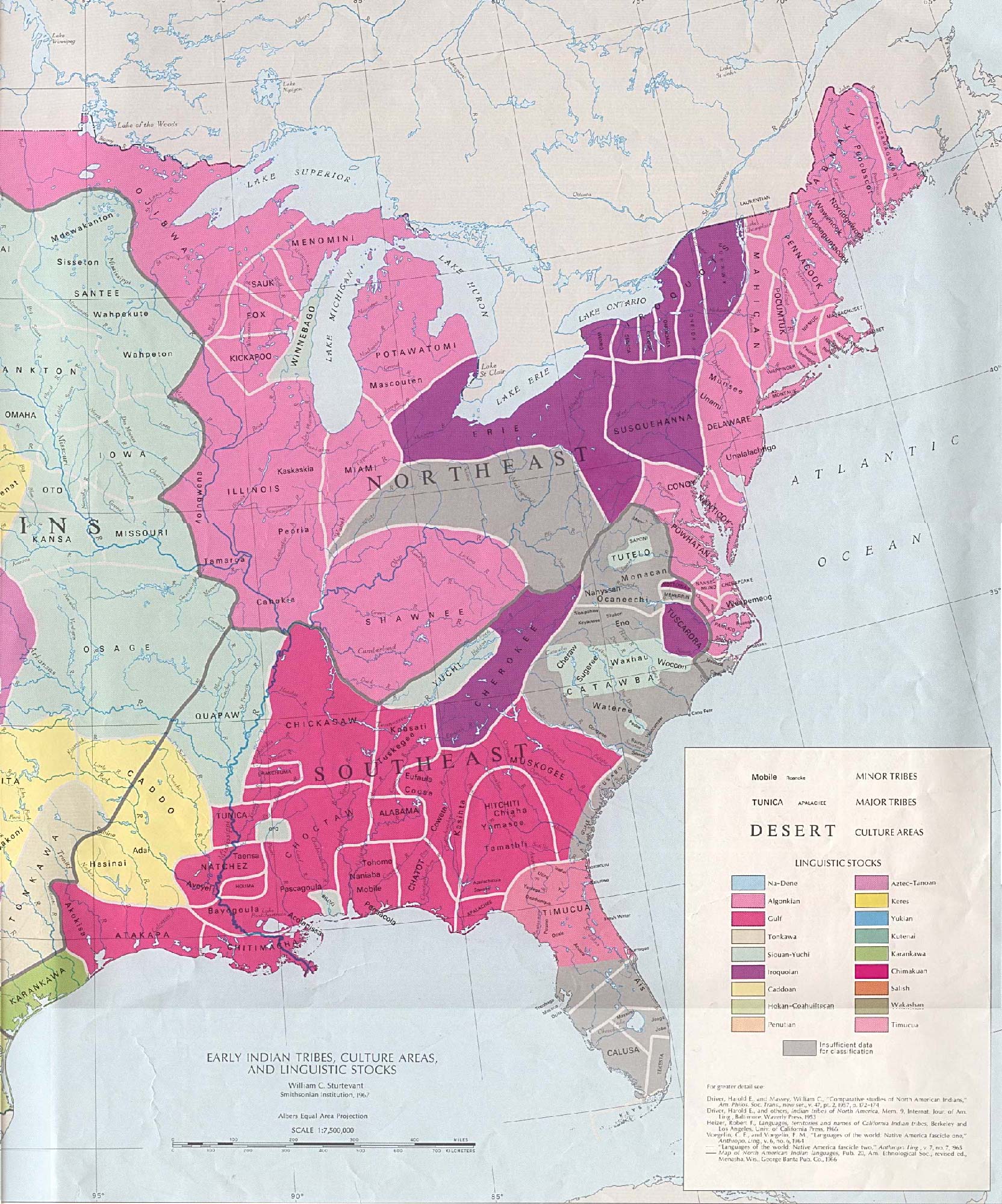
- Early Indian Tribes Map
- 13 British Colonies map
- “A Friend of the Indians” Poem English Spanish
- The Loss of Native American Lands Within the US: Every Year video
- The Fight for Freedom and Independence of the First Nations of North America article English Spanish
- Grading Rubric for Foldable Project
- Vocabulary word wall

The physical setup of the classroom #

The students will participate in the initial Hook object lesson at the reading rug to better facilitate the sharing and discussion of items and how they relate to the lives of American Indians. This is also where the public document will be displayed, and students will sit here as we add new hypothesis to it. The students’ desks are arranged in groups of eight and face the projector board. The students also are able to view the word wall from their desks. We will watch the videos and examine map slides from this location.
The teacher will use her best judgement to decide where students will read the articles. If students are engaged and focused, they may read in partner pairs with flexible seating across the room. If students need more direct modeling, the teacher will read the texts aloud and have the students choral read, while walking around them with students at their desk or at the reading rug.
Lesson Events #
Step 1: Hook #
TW with the students at the reading rug, introduce the inquiry question.
“This week we will be learning about American Indian history. State and have students repeat Inquiry question “What Impact did colonization have on American Indian Tribes?” Then introduce Mystery Time Capsule. “I have something I would like to show you. This is a time capsule, and it contains a mystery. Inside are clues relating to the lives of American Indians at the time of colonization, around 1500 CE. We are going to become history detectives. Together we will uncover secrets of the past and understand how it has shaped the present. When you talk to your classmates about the artifacts, please use the sentence stem “This artifact impacted American Indians because…”
SW interact with the artifacts inside the time capsule.
Students should be encouraged to discuss their insights into the artifacts with their classmates. They may make observations such as:
- American Indians used it for trade. (wampum beads, or animal skins)
- It shows how American Indians got sick (plague drawings)
- American Indians spent time farming these. (corn or pumpkins)
- Colonizers tried to get American Indians to change religions (crosses)
- New trade Goods came in (bonnet, blankets)
- Colonizers took tribal land (Virgina charter, image of Virginia map)
TW Walk around engaging with some students to make sure everyone has a chance to participate.
Step 2: Hypothesis #
TW introduce public document.
Have volunteers state their observations about how the artifacts may have impacted American Indians. Write student responses onto the public document verbatim. Explain how we are creating a list of evidence to use to support a hypothesis on “What impact did colonization have on American Indian Tribes?”
TW transition to a short lesson on vocabulary terms.
First go through the words related to inquiry and explain how we will be using them for this lesson. Next go over the American Indian specific words. Explain that these words will be coming up in our future data sets. See if any students can give an example of something that has been around since time immemorial (agriculture, songs, dance, etc.). Lastly, go over the words related to Colonization. Have students choral read the definitions.
TW have students return to their desks and hand out the Inquiry Worksheet.
Explain what the inquiry process is. We are creating a hypothesis and then revising it after exploring a data set. First, let’s fill in 3 key points from the data set we just explored. Reference our public document if you need help remembering. The teacher will walk around to see how well students understand. Next, ask for volunteers to share their key points. Model filling out the inquiry chart and use the document camera to cast it onto the white board. Students should check if they are doing it correctly. Now we will fill out our first hypothesis. Use the sentence stem “Colonization impacted American Indian tribes though…”
SW write their hypothesis independently.
Afterwards, have students pair and share their hypothesis with another student. Ask for a volunteer to read their hypothesis to the whole class. One possible hypothesis could be “Colonization impacted American Indian tribes though trading items and culture.”
TW write one student answer on the inquiry worksheet so students can use the model to see if they are filling it in correctly.
Step 3: Hypothesis revisions #
Data set 2: Background Knowledge #
TW show slide 5 from the google sheets for data set 2, the timeline.
Hold the book, Native Americans: A Visual Exploration (The Big Picture) by Shaker Paleja up for the class to see. Today we will be examining a timeline found on pages 10 and 11. This book is available for students to read during independent reading time. Read through the timeline and discuss the events. Make sure to point out the time period we will be focusing on for this lesson. Have students turn and discuss the data set, looking for key points. Tell each group to produce one point to share with the class. Add these key points to the public document. Then have students write these points into the inquiry worksheet under data set 2. Discuss how this affects our hypothesis.
SW write a revised hypothesis independently. After writing, students may volunteer to share their hypothesis revisions.
TW Select one answer to write into the model worksheet.
Data set 3: Trading #
TW Remind students of the inquiry question “What impact did colonization have on American Indian tribes.
We are going to start today with a short activity. European colonists and American Indians were strangers when they first met. They did not speak the same language. For the next two minutes, you will turn to the person next you and find out “What did you do after school yesterday?” Here is the catch though, just like the colonists and the American Indians, you cannot use words. After the students have time for the activity, bring the students back together and ask, “What made this interaction difficult?” “How did you communicate without speaking?” “What helped you understand your partner?”
SW respond with ideas like, they drew a picture, mimed the activity, charades, or failed to find the information.
TW show the What Does a Beaver Felt Hat have to Do with Manhattan video (slide 6 in the google slide set).
We are now going to watch a video that shows one of earliest impacts between colonists and American Indians. Remember, when they first met, they had few ways to communicate. As we watch this video pay attention to how different attitudes about trade between the Hudson traders and the American Tribes. Have students bring out their inquiry worksheet to write down key notes as the video plays.
Have students share key notes about the video, they should understand the concept of trading goods, particularly beaver pelts. If students do not bring it up, the teacher should have a quick lesson on the point the video makes about this history came from the Colonists point of view. American Indians did not have a written history at that point. When viewing evidence, you always need to consider things like who wrote the source, who’s voice is present and whose is missing, and when was this written?
TW explain the viewpoint sorting activity.
In groups, students will sort through cards showing different viewpoints about trade. Introduce by reminding students “Native nations of the northeastern Atlantic coast have engaged in exchange for centuries as a means of social cohesion. The fur trade brought together two distinct cultures with vastly different value systems. For Native peoples, a cultural emphasis on relationship building and social balance influenced trade practices. Dutch culture emphasized the acquisition of goods and property for individual and economic advancement. “Four of the cards represent the views of the American Indians and 4 cards represent views of the Dutch Traders.
Students should talk to each other about why they think a viewpoint comes from a particular group. After the cards are sorted, come back together as a whole class to have a discussion on how the different views affected interactions between the American Indians and the Dutch Traders. Add key points to the public document then discuss how the key points affect the hypothesis.
SW revise hypothesis #5 independently. Afterwards, have students pair and share their hypothesis with another student. Ask for a volunteer to read their hypothesis to the whole class
TW Have volunteers share what they wrote. Select one answer to write into the model worksheet.
Data set 4: Lost Culture #
TW introduce the “Encounter, Colonization, and Devastation” article (slide 8 in the google slides set)
This next article will bring more in depth to how some of the interactions between American Indians and European colonizers. Students will read this article in their learning partner groups. One student will read the paragraph aloud and then the other student will summarize it in 10 words or less. The pair will alternate though reading for the entire article.
TW support students with reading fluency
Walk around the room helping students with pronunciation and any questions students may have about the information. The teacher will also be assessing how well students understand the material. Alternatively, if the classroom is having difficulty focusing, or struggling with the reading level, the teacher can switch to a read-aloud style and have students choral read important sentences.
With their learning partners, students will write down 3 main points from the article into their Inquiry worksheet. Have the class come to the reading carpet to share their main points and add it to the public document. The class will return to their desks and discuss the key evidence points and how it affects the hypothesis.
TW fill in student evidence onto the model inquiry worksheet
SW revise hypothesis #4 independently. When finished, students may volunteer to share their new hypothesis.
TW Select one answer to write into the model worksheet.
Data Set 5: Lost Land #
TW introduce the maps from slide 9 in the google slide set
Use the overhead projector to cast the maps onto the white board. Have students sit at their desks and view the maps from data set 5. Ask the students to spend a few minutes discussing with their groups about what they notice about the two maps. Have the students use the sentence stem “One thing I notice that is similar about the maps is…” Or “One thing I notice that is different between the two maps is…” The answers the students give will likely be factual.
“One thing I notice that is similar about the maps is…”
- The maps are in the same area of the United States
- Both maps show lakes and oceans
“One thing I notice that is different between the two maps is.
- One map is black and white while the other map is color
- One map shows the land from the colonizer’s perspective and the other show it from the American Indians point of view.
- One map looks like current states while the other does not.
TW introduce the poem “A Friend of the Indians.” (Slide 10 in the google slide set)
While you look at these maps, I am going to read to you a poem by Joseph Bruchac. Bruchac is telling us a conversation that happens between Red Jacket, an Iroquois leader in the late 1700’s, and his friend. As you listen to this, I want you to think about what the theme of the poem is, what message the author is trying to convey. Use the sentence stem “The theme of this poem is…” The answers students give to this prompt will likely be interpretive.
“The theme of this poem is…”
- American Indians have no more land to give up
- Colonists pushed American Indians off their lands
TW Show students the video “The Loss of Native American Lands Within the US: Every Year” (slide 11 in the google slide set).
Explain that the story of how American Indians lost their homelands to European colonists is a complex and tragic chapter in the history of America. As colonists arrived, they brought new opportunities, but also new challenges for the American Indians who had lived there for thousands of years. The process of land acquisition and dispossession unfolded over the centuries through treaties, conflicts, broken promises, and the relentless westward expansion of the colonists. As you watch please think about the questions “What Impact did it have on American Indians? Do you think westward expansion of colonists was good or bad?”
Have students turn and talk to their partners to answer the questions. Tell students that this time when we discuss as a class, I will be asking them to tell me what their partner said so they need to be listening. Use the sentence stem “I think westward expansion was … because it impacted American Indians this way…” Answers should be evaluative. Answers may be focused on the data set 5 information, but students should be encouraged to use evidence from other data sets too. Once all students have had a chance to share, call on a few to share what their partner said. This is a good time to encourage engagement from quieter students.
“I think westward expansion was … because it impacted American Indians this way…”
- Bad, because American Indians lost their homeland
- Bad, because people died fighting over land
- Good, Because American Indians had access to trade and culture
Use these statements to add evidence to the public document. Then have students fill in the key points section in the Inquiry worksheet. Discuss how the key points affect the hypothesis.
TW add the discussed evidence to the model Inquiry worksheet.
SW revise hypothesis #5 independently. Afterwards, students will pair and share their hypothesis with someone they have not worked with yet. Ask for a volunteer to read their hypothesis to the whole class
TW Select one answer to write into the model inquiry worksheet.
Data set 6: Lost Sovereignty #
TW introduce the article “The Fight for Freedom and Independance of the First Nations of North America." (slide 12 in the google slide set)
This is our final data set. You are now all expert history detectives. I would like you to independently read this article. Think about the ways it details the impact of colonization on the American Indians. Before we do, let us review some of the vocabulary words. Have students volunteer definitions, reminding them to reference the word wall if necessary. While students are reading the article, the teacher will pull a small group of students that need assistance with reading over to the reading rug. They will read the article together with teacher support.
When the reading is over, bring the whole class to the reading rug. One last time add evidence to the public document. Discuss how this new evidence affects the hypothesis. The class will return to their desks to fill in key points into the inquiry worksheet.
TW fill in student evidence onto the model inquiry worksheet
SW revise hypothesis #6 independently. Students may volunteer to share a revised hypothesis.
TW Select one answer to write into the model worksheet.
Step 4: Thesis Writing and Closure #
TW discuss with students about what makes a good thesis.
Bring students over to the reading rug so they can all see the public document. Congratulations everyone, we have successfully examined 6 data sets! Now that we have finished collecting evidence and revising our hypothesis, we are going to create a foldable essay that answers the question “How did colonization impact American Indian tribes?” We will be creating a thesis with this project. At this point, review the definition of a thesis from the word wall and discuss with students what makes a good thesis.
Students should say things like “A good thesis…”
- Answers the inquiry question
- Is based on evidence
- Can be understood by our classmates
TW Have students vote on most impactful evidence.
Since we need our thesis to be based on evidence, we are going to consider the evidence created. As a class we will vote on which pieces of evidence are the most important for us to keep in mind when creating the thesis. Which statements here had the biggest impact on American Indian tribes? Go through each piece of evidence on the public document with the students and record the number of votes. Highlight the top 4-5 pieces of evidence on the public document.
TW have students create their foldable essay.
Now that we have our evidence, we can use this to create our thesis essay. We will be doing this with a foldable project to answer our inquiry question “What impact did colonization have on American Indians.” Have students create their foldables as outlined in the earlier part of the lesson plan. They should be given a rubric, foldable template to fill out, scissors, glue, and construction paper. Students may use any combination of hand or computer skills to complete the foldable.
When the students have completed their foldable essay, they will share it with their table. Each table should choose one hypothesis they think is the best to share with the whole class. The teacher will write these on the white board. Once all three are shared, the class will vote on which hypothesis they think best answers the question “What impact did colonization have on American Indians?”
TW debrief the students about the inquiry lesson.
Class will transition to the reading rug. The teacher will ask students, now that we have finished our inquiry lesson, what have you learned? Answers may be things like “I learned through the inquiry process that…”
- Our claims need to be backed by evidence
- Not all evidence is equal
- Who is telling the story affects the meaning
- Hypothesis should change when we get new data
The teacher will emphasize that the beauty of an inquiry lesson is in the revision of our hypothesis as we examine new data. Too often people will jump to a conclusion or assume that they already know the answer to something. People can be close-minded and unwilling to accept new ideas. With inquiry we have a chance to view evidence from multiple perspectives. Inquiry helps us to understand the importance of research.
Resources #
Google Slides for All Data Sets
Data Set 1: Hook, Time Capsule Mystery #
| American Indian Artifacts | |||
|---|---|---|---|
 |  Pumpkin Seeds |  Dried Corn |  |
| Colonial Artifacts | ||||
|---|---|---|---|---|
 |  |  |  |  |
| Period Images | ||
|---|---|---|
 |  |  Wood block print showing “Mortal Sickness among the Indians” |
 |  |  |
Data Set 2: Background Knowledge #
Native Americans: A Visual Exploration (The Big Picture) by Shaker Paleja

Data Set 3: Trading #
What Does a Beaver Felt Hat have to Do with Manhattan video Summary: Video introduces how Manhattan becomes a trade center between Hudson and the Native Americans. It talks about the goods that were traded. There is an explanation of how cultural norms about trading were different between European traders and Native Americans.
Cultural Ideas about Trade Cards OR computer access to the online game.
| Exchange has always been an important part of our culture. It helps keep the balance needed to hold people and community together. | Exchange is a way of giving thanks, of bringing people together, of showing respect, and of sharing goods and land. |
| Exchange is a way of acquiring knowledge and things we need to survive in a new land. | Exchange is important for getting things we want and for making a profit. |
| Exchange is a way of establishing agreements, building alliances, and determining rights of land use. | Exchange reminds us of our responsibility to our community and to one other. |
| Exchange is used in business transactions and as a way to “seal a deal.” | Exchange is a way for a person to own things like land and goods. |
Data Set 4: Lost Culture #
Encounter, Colonization, and Devastation Article English Spanish


Data Set 5: Lost Land #
 |  |
“A Friend of the Indians” By Joseph Bruchac Poem English Spanish
A man who was known as a friend of the Indians spoke to Red Jacket one day about the good treatment the Senecas enjoyed from their white neighbors. Red Jacket walked with him beside the river, then suggested they should sit together on a log next to the stream. They both sat down. Then Red Jacket slid closer to the man and said, “Move Over.” The man moved over, but when he did Red Jacket again slid closer. “Move Over,” he said. Three times this happened until the man had reached the end of the log near the water then, once more, he was told, “Move Over.” “But if I move further I shall fall in the water,” the man pleaded, teetering on the edge. Red Jacket replied, “And even so you whites tell us to move on when no place is left to go.”
The Loss of Native American Lands Within the US: Every Year video
Data Set 6: Lost Sovereignty #
The Fight for Freedom and Independence of the First Nations of North America article English Spanish
We as a nation celebrate the Declaration of Independence with joy and pride, and rightly so! The freedoms all Americans enjoy were hard won and deserve to be celebrated and remembered. For native peoples, however, the Declaration of Independence has another meaning, too.
The Declaration of Independence supported the misperceptions of Indians at that time. Because Indians were referred to as ‘savages’ in the Declaration, many thought that this gave them the right to take advantage of and destroy Indians. The Declaration of Independence, whether or not the Founding Fathers intended it, encouraged the destruction of the independence, or sovereignty, of tribal people. The Declaration says that Indians were “merciless Indian savages” who fought for the British Empire. This is only a small part of the whole truth.
Colin Calloway, author of The American Revolution in Indian Country, begins his book with a simple, yet powerful comparison:
…Indian people in revolutionary America, whether they sided with rebels, redcoats, neither, or both, were doing pretty much the same thing as the American colonists: fighting for their freedom in tumultuous times. The Revolution was an anti-colonial war of liberation for Indian peoples too, but the threat to their freedom often came from colonial neighbors rather than distant capitals [meaning England, France, or Spain], and their colonial experience did not end with American independence. (xiii)
Mr. Calloway is saying that it did not matter which side tribes sided with. After the American Revolution, the Indian fight for independence was just beginning. For the first peoples of this continent, the American Revolution was devastating. It destroyed their ways of life and eliminated entire tribes and their homelands.
During the American Revolution, Tribes built alliances to preserve their own freedoms and homelands. Does this sound like the exact same goals as the colonists? Because the Revolution was about the control of Indian lands as much as it was about colonial independence, Indians lost freedom as Americans gained it. But loss of land was not the only price Indian nations paid.
During times of war, violence crops up in many places other than on the battlefield. In futile attempts to preserve their tribal sovereignty, Tribal nations often waged war against each other. Many tribes sided with, battled, destroyed, and were destroyed by each other. Many challenged their own tribal traditional ways of life, and civil war was the result.
Just as in any war, there was land lost and gained, and some tribes forced other tribes to move from their traditional homelands. For example, the Shawnees of Ohio moved to Missouri, and the Iroquois League split in two: one side lived in New York; the other in Ontario, Canada. The sad truth is that it did not matter who Indian nations fought for: the outcome of the American Revolution for the many independent Northeastern tribes was a massive destruction of tribal sovereignty—an end to the freedoms they had known since time immemorial.
Inquiry Worksheet #
Foldable Project #
Examples #
| Example Foldable |
|---|
 |
Outside of Foldable |
 |
Inside of Foldable |
Rubric #
| Excellent (4) | Good (3) | Fair (2) | Poor (0-1) | |
|---|---|---|---|---|
| Thesis SSS.2.4.1 ELA.W.4.9 ELA.RI.4.9 SSS.2.4.2 | I will create a thesis that addresses in inquiry question “How did colonization impact American Indians Tribes?” My claims are warranted by at least 4 pieces of evidence from 4 different data sets. | I will create a thesis that addresses in inquiry question “How did colonization impact American Indians Tribes?” created though hypothesis revisions. My claims are warranted by 3 pieces of evidence from 3 different data sets. | I will create a thesis that addresses in inquiry question “How did colonization impact American Indians Tribes?” that is supported by evidence and created though hypothesis revisions. My claims are warranted by 2 pieces of evidence from 2 different data sets. | The thesis is only supported by one data set. No points will be given if thesis is not supported by evidence from the information presented in class. |
| Vocabulary ELA.L.4.4 | I will use 4 or more of the vocabulary words. | I used 3 vocabulary words. | I used 2 vocabulary words. | I used no vocabulary words. |
| Illustrations VA:Cn10.1.4 | I have 4 images related to the evidence presented. Each image has a caption. | I have 3 images related to the evidence presented. Each image has a caption. | I have 2 images. Each image has a caption. | I have no images. |